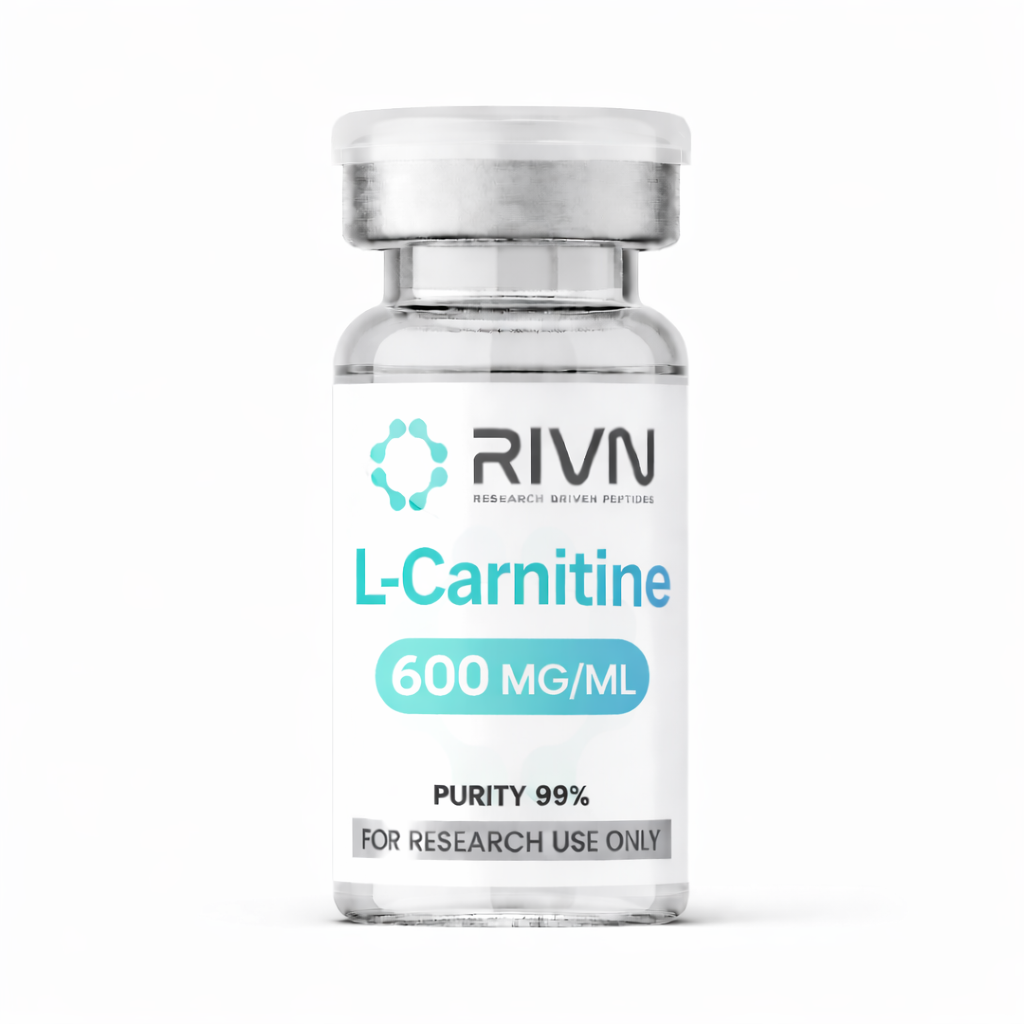
L-Carnitine is a naturally occurring amino acid derivative synthesized endogenously from lysine and methionine, primarily in the liver and kidneys. It plays an indispensable role in mitochondrial energy metabolism by functioning as the essential transport molecule responsible for shuttling long-chain fatty acids across the inner mitochondrial membrane, where they undergo beta-oxidation for ATP production.
Mechanism of Action
At the cellular level, L-Carnitine forms acylcarnitine esters with activated fatty acids (acyl-CoA), facilitating their entry into the mitochondrial matrix via the carnitine palmitoyltransferase (CPT-1 and CPT-2) enzyme system. This transport mechanism is rate-limiting for fatty acid oxidation, making carnitine availability a key determinant of lipid-based energy utilization. Additionally, L-Carnitine modulates the acyl-CoA/CoA ratio within the mitochondria, supporting metabolic flexibility and reducing acyl-CoA accumulation that can impair glucose metabolism.
Research Areas
Current research has explored L-Carnitine across several domains:
∙ Body Composition — Studies suggest supplementation may enhance fat oxidation during exercise, particularly in populations with suboptimal endogenous carnitine status.
∙ Exercise Recovery — Research indicates a potential role in reducing exercise-induced oxidative stress and muscle tissue damage via attenuation of free radical production.
∙ Insulin Sensitivity — Some evidence points to improved glucose disposal and insulin signaling, possibly through reduced lipotoxic intermediates in skeletal muscle.
∙ Cardiovascular Markers — Clinical investigations have examined its influence on endothelial function, lipid profiles, and cardiac output in various subject populations.
∙ Cognitive & Neurological Function — The acetylated form, Acetyl-L-Carnitine (ALCAR), has been studied for its ability to cross the blood-brain barrier and support acetylcholine synthesis and mitochondrial function in neural tissue.
Molecular Profile
∙ Molecular Formula: C₇H₁₅NO₃
∙ Molecular Weight: 161.20 g/mol
∙ CAS Number: 541-15-1
∙ Synonyms: (R)-3-Carboxy-2-hydroxy-N,N,N-trimethyl-1-propanaminium hydroxide inner salt; Levocarnitine
For research purposes only. Not intended for human consumption. All product information is intended for use in licensed research settings.