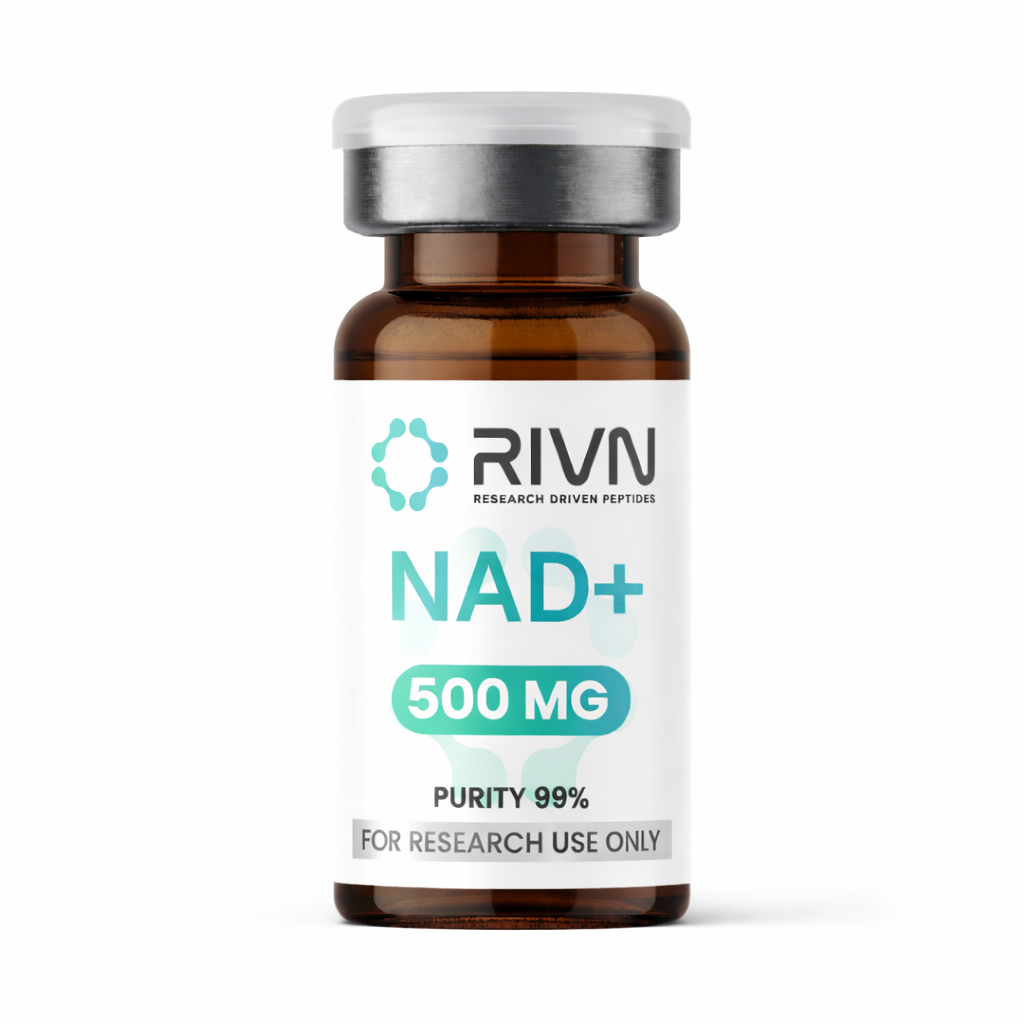
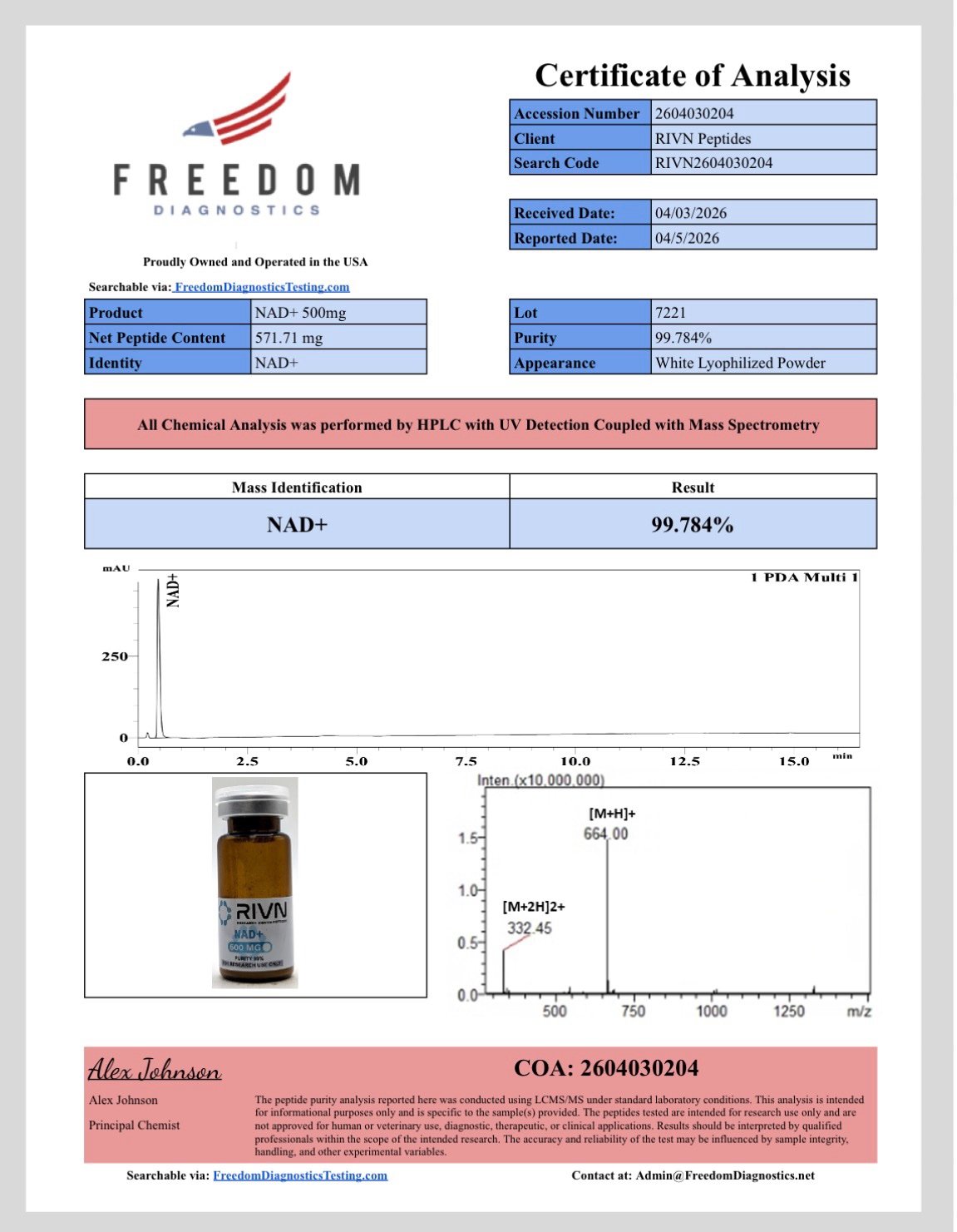
NAD+ – Research Grade Peptide
NAD+ (Nicotinamide Adenine Dinucleotide) is supplied as a research-grade compound for use in controlled laboratory
and in-vitro research environments. It is widely studied in experimental models focused on cellular metabolism,
energy transfer mechanisms, and redox-related biochemical pathways. Due to its central role in cellular processes,
NAD+ is frequently utilized in research investigating metabolic signaling and molecular energy regulation.
NAD+ supplied for research applications is intended exclusively for laboratory research, analytical testing,
and in-vitro scientific investigation. This compound is not intended for human or animal use and is not approved
for therapeutic, diagnostic, or medical applications.
For research use only. Not for human or animal consumption.
Research Overview
NAD+ is extensively examined in research environments for its involvement in cellular energy metabolism and redox balance.
Preclinical and experimental literature commonly explores its role as a coenzyme in metabolic reactions, mitochondrial
function studies, and enzymatic activity research. Its biochemical relevance makes it a key reference compound in
laboratory-based metabolic and cellular signaling investigations.
Key Research Focus Areas
- Cellular Energy Metabolism: Studied in research models examining energy transfer and metabolic efficiency.
- Redox Reaction Research: Utilized in laboratory systems investigating oxidation-reduction processes.
- Mitochondrial Function Studies: Applied in experimental research focused on mitochondrial and cellular metabolism.
- Enzymatic Activity Models: Used in non-clinical research analyzing enzyme-cofactor interactions.
- In-Vitro Metabolic Research: Investigated exclusively in controlled laboratory and analytical environments.
All information associated with NAD+ is derived from experimental and preclinical research contexts.
No claims are made regarding medical, therapeutic, or clinical outcomes.


Reviews
There are no reviews yet.